
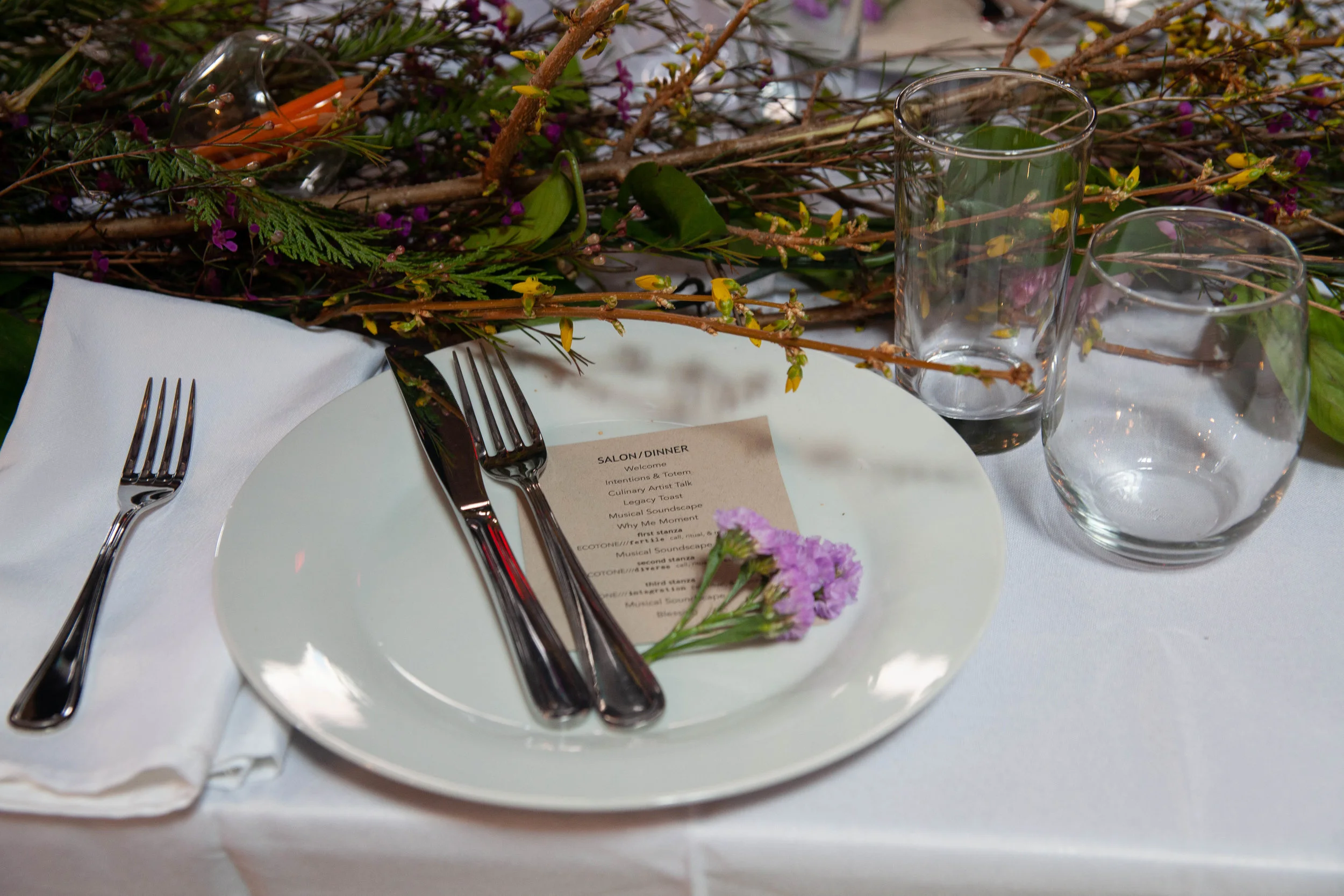
Ecotone Salon Dinners
A living installation of cross-pollinating stories where Difference Becomes Dignity
The meal is where we first learn to be whole and human.
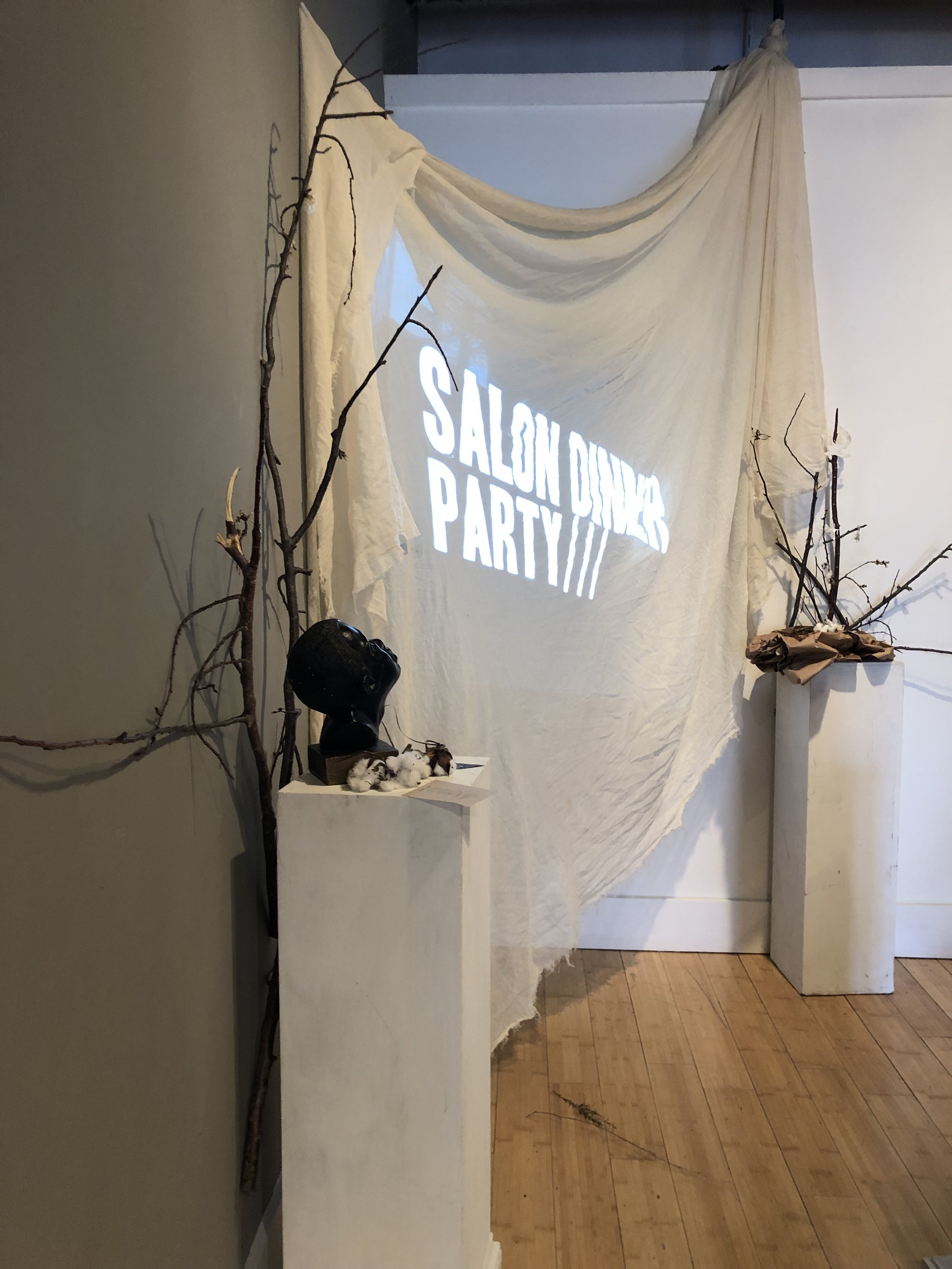
Before civil institutions, schools, or religions, there was the table—a place where stories, ethics, and culture were first practiced. Ecotone Salon returns to this foundational space. Created by artist and visual anthropologist Marlon F. Hall, the series is a form of social sculpture, where hospitality, story, and conversation become the medium for cultivating human connection across difference. In ecology, an ecotone is where two environments meet and new life emerges. Forest meets meadow. River meets land.
Ecotone Salon translates this idea into human experience.
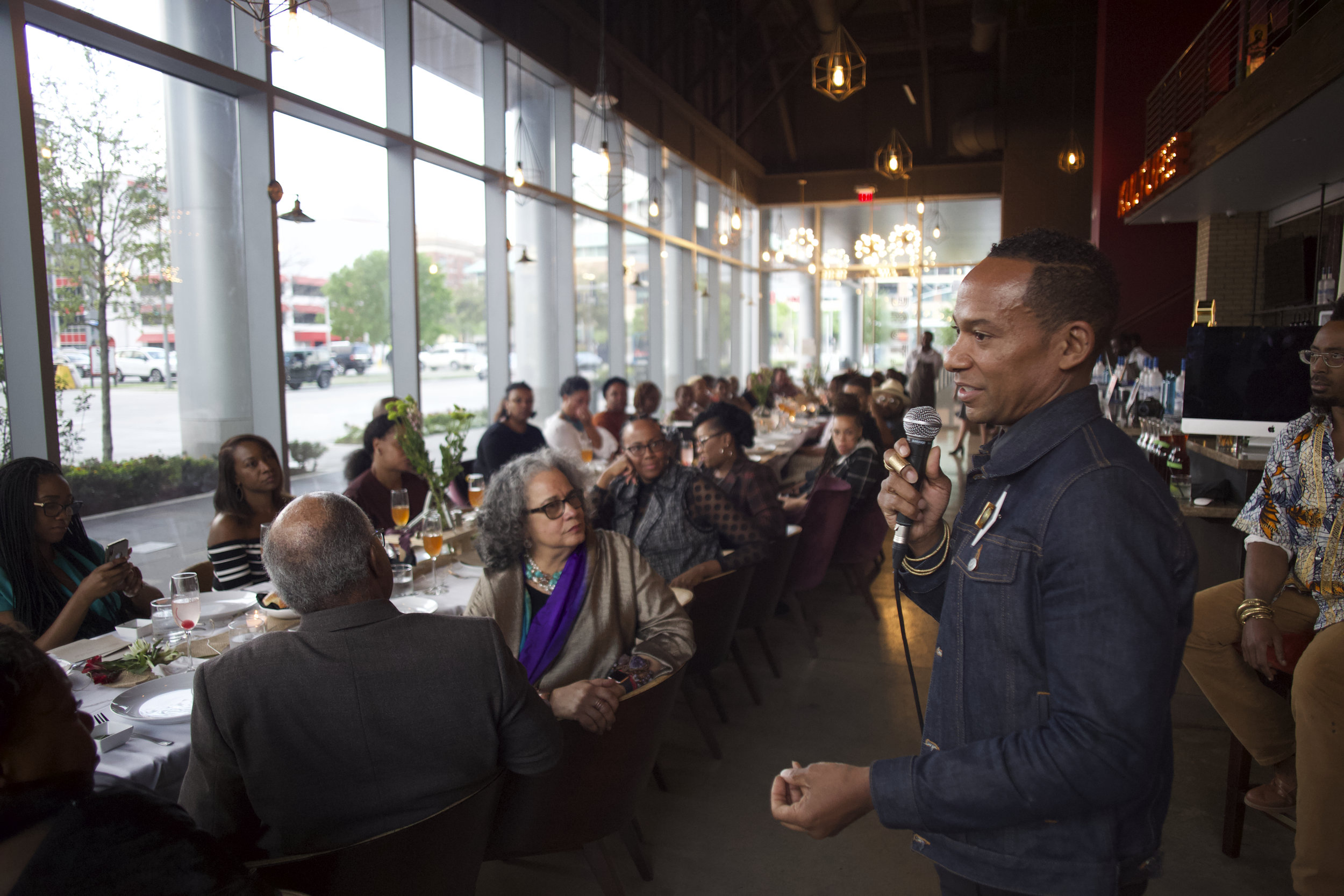
The Anthropology of Story : Houston Museum of African American Culture (an Example)
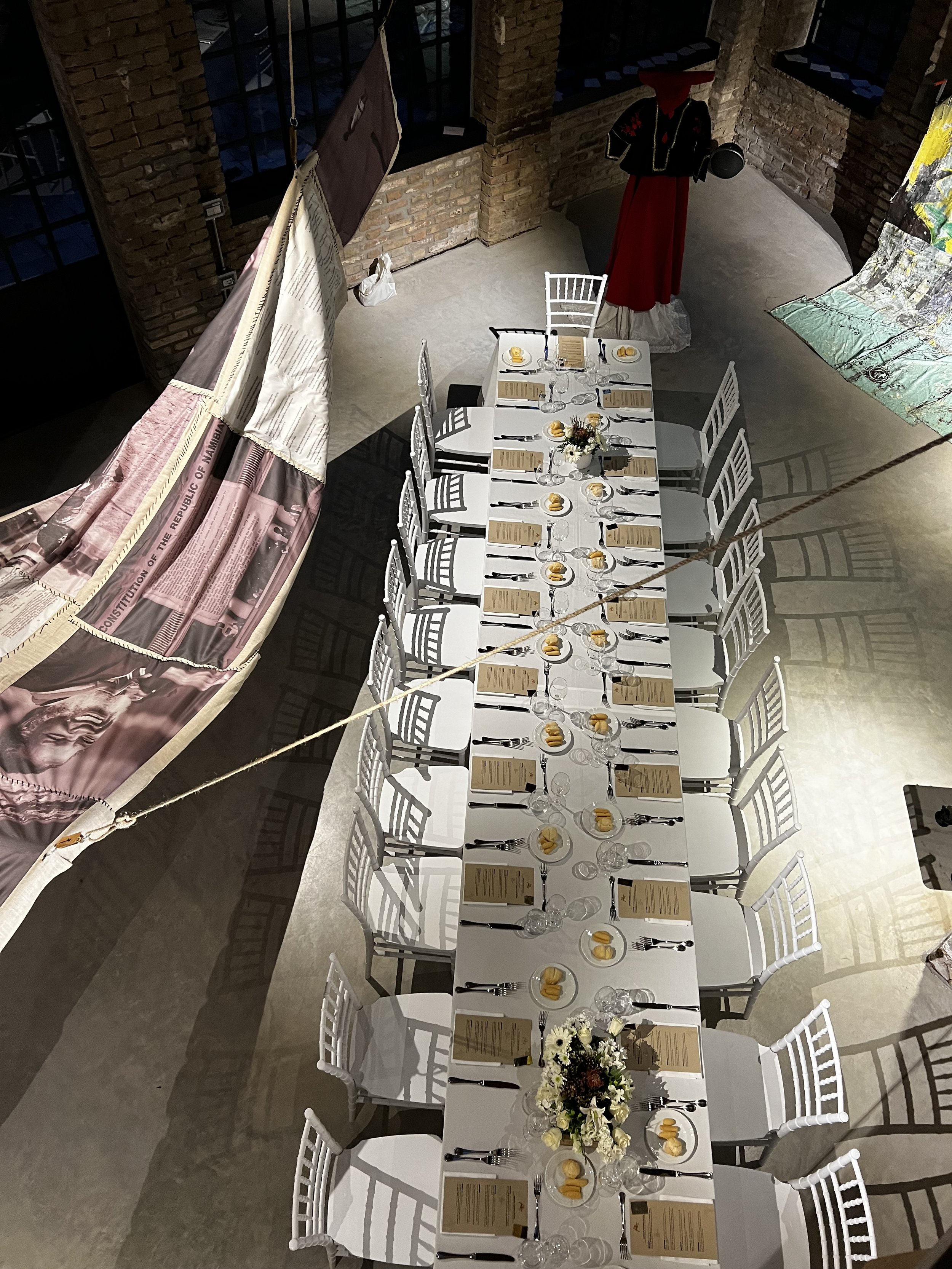
Venice, Italy — “Ecotone,” a salon dinner curated by visual anthropologist Marlon F. Hall at the Kenya Pavilion during the Venice Biennale finissage. The gathering brought African and British artists and curators together to explore human memory, identity, and the deeper reasons we create.
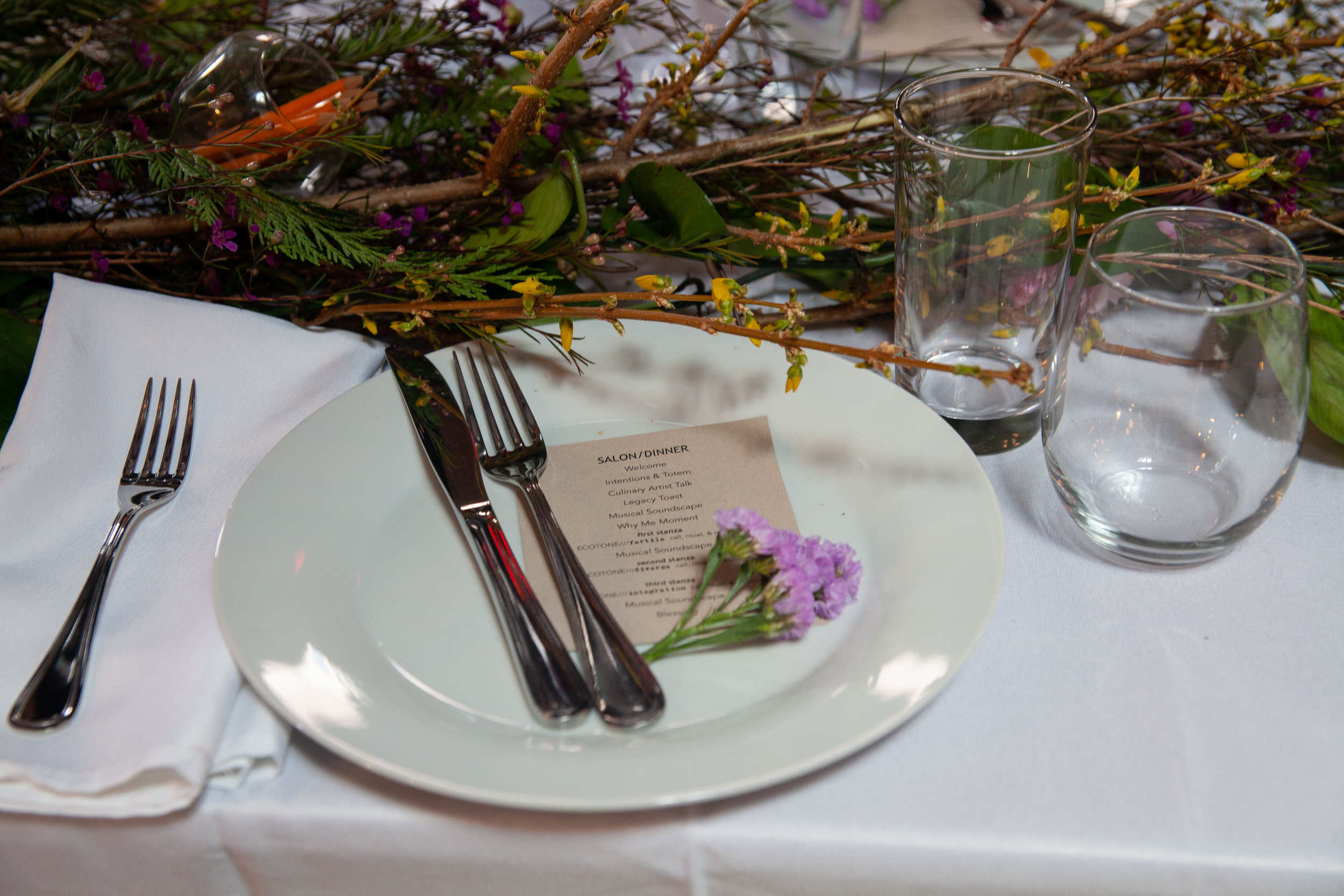
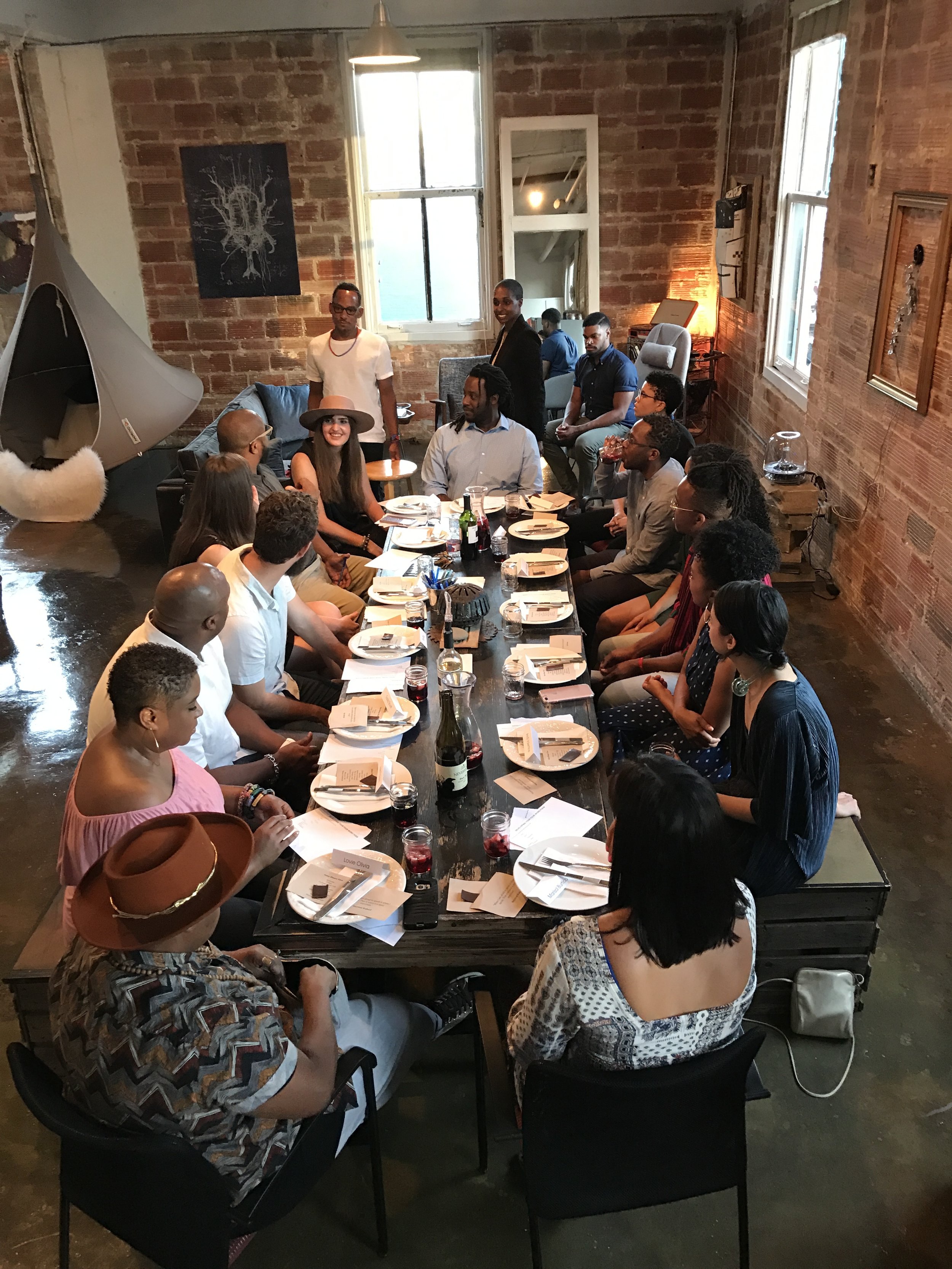
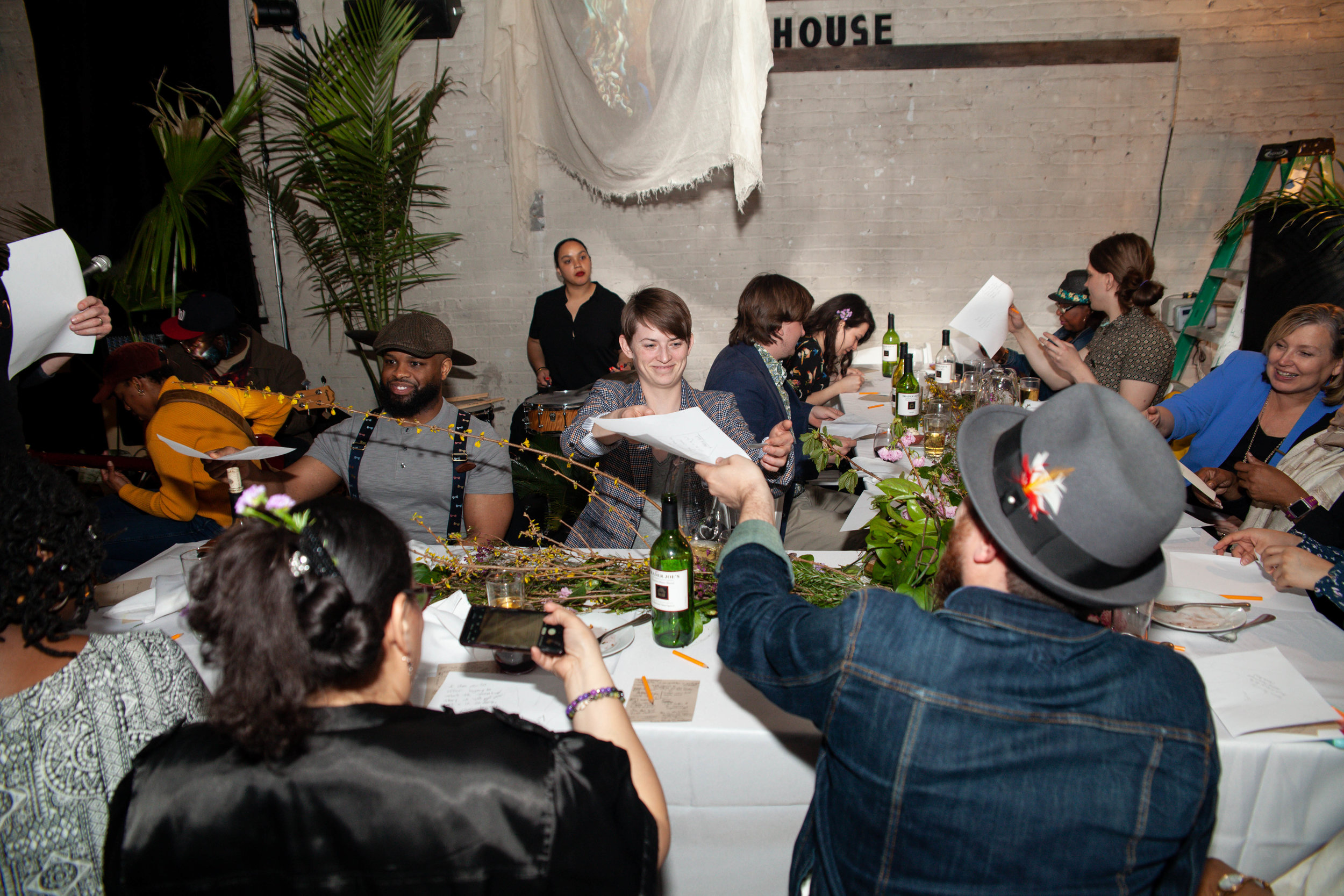
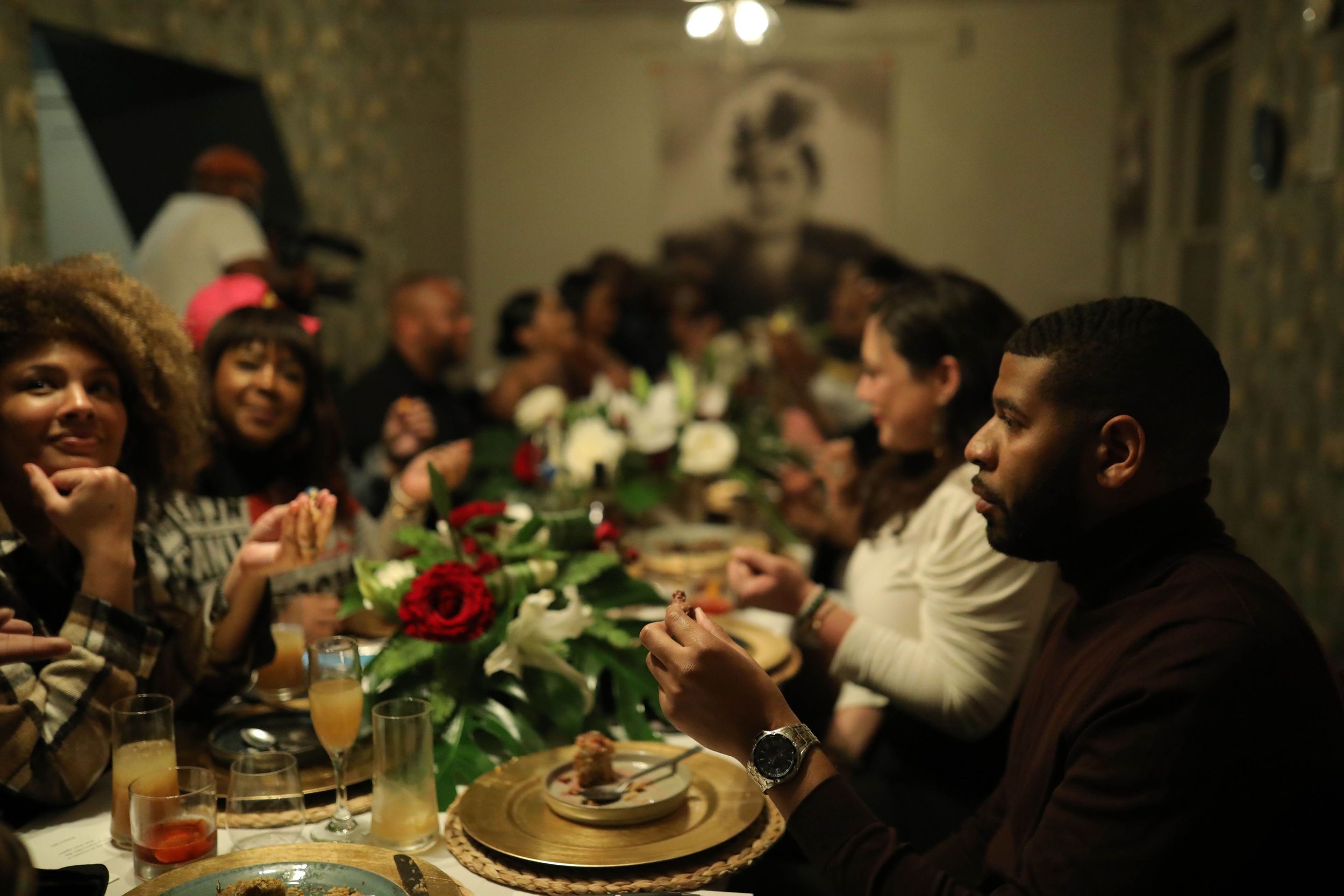
Through carefully composed tables and guided conversation, guests from different cultures, professions, and beliefs gather to share a meal designed for listening, reflection, and civic imagination.
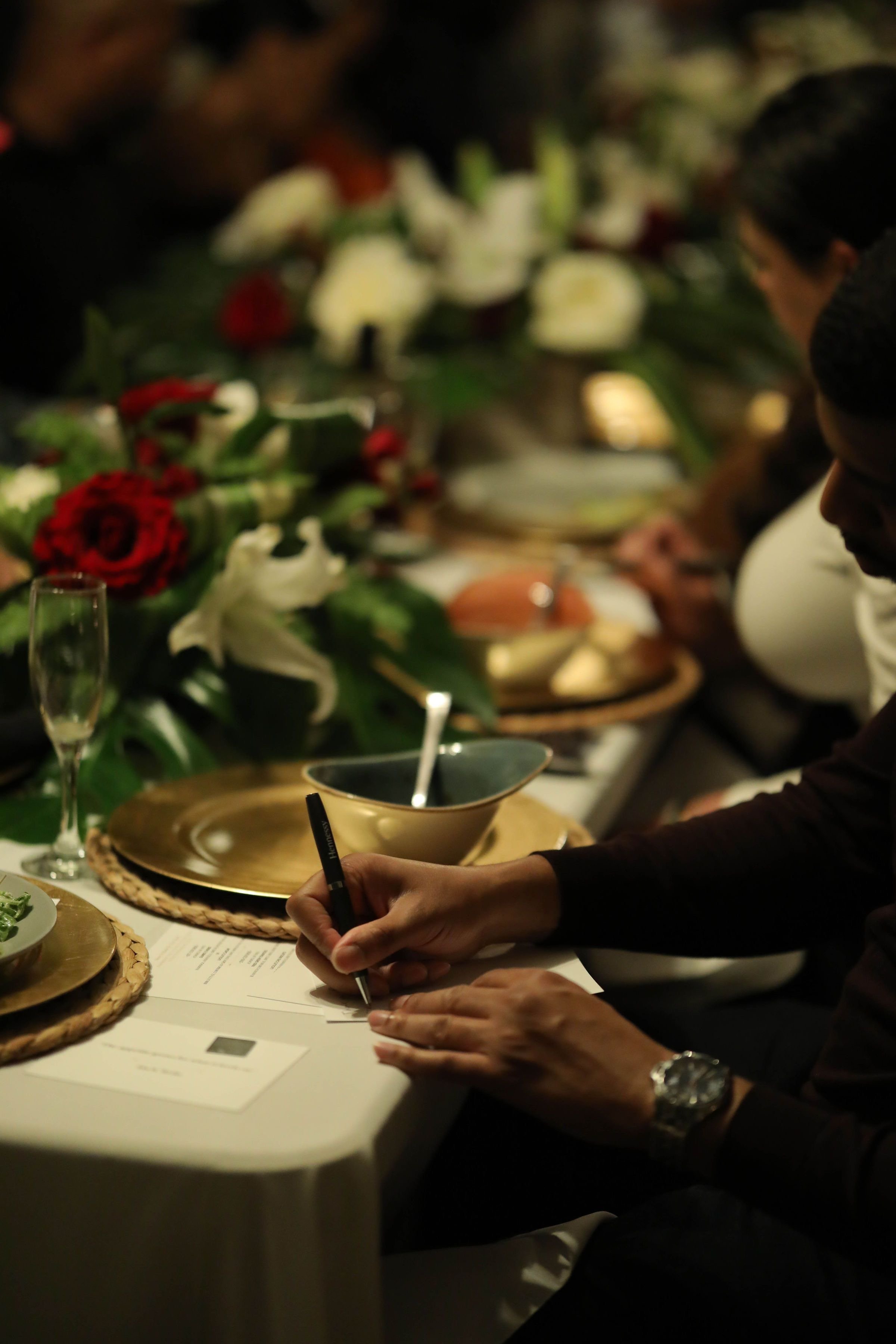
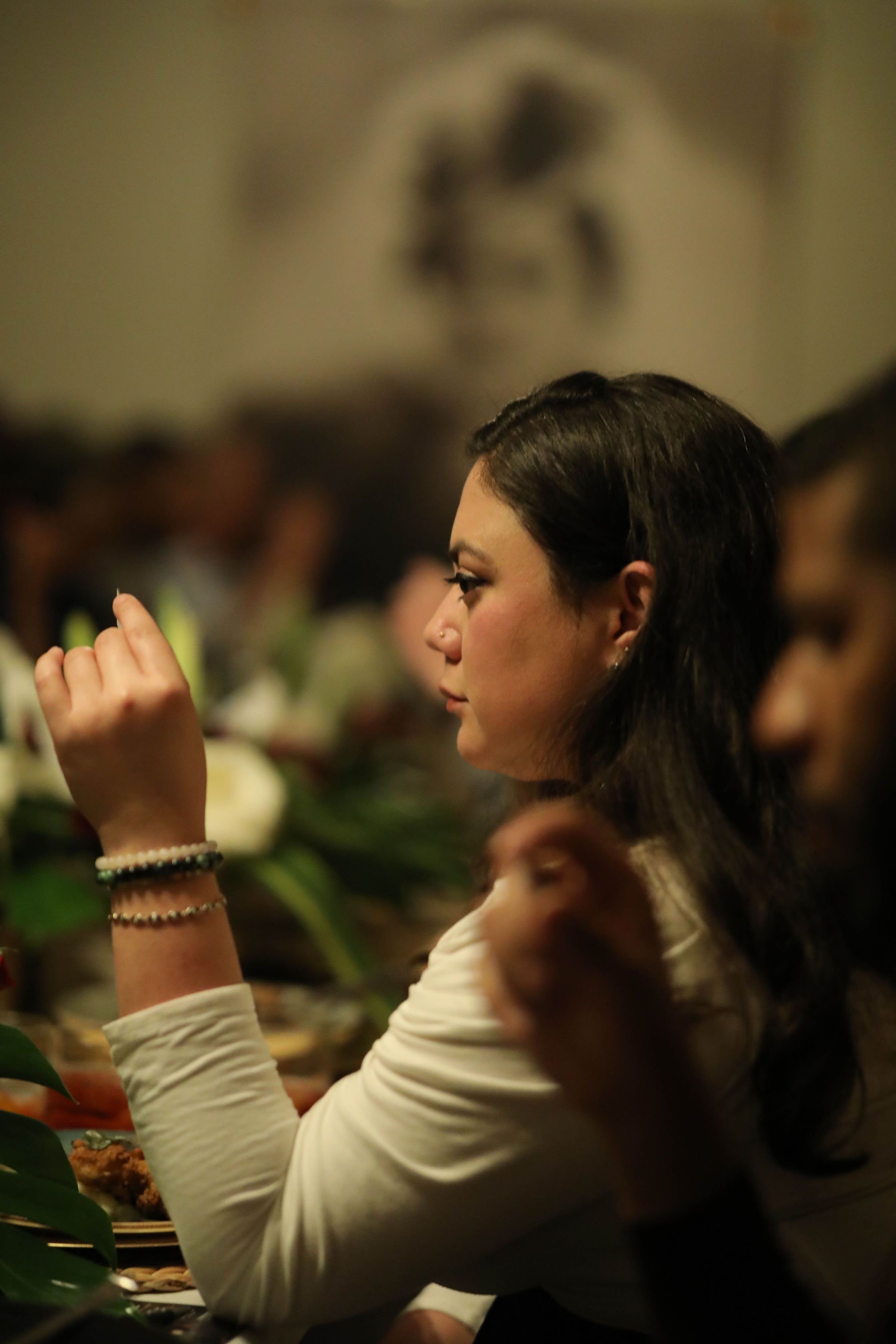
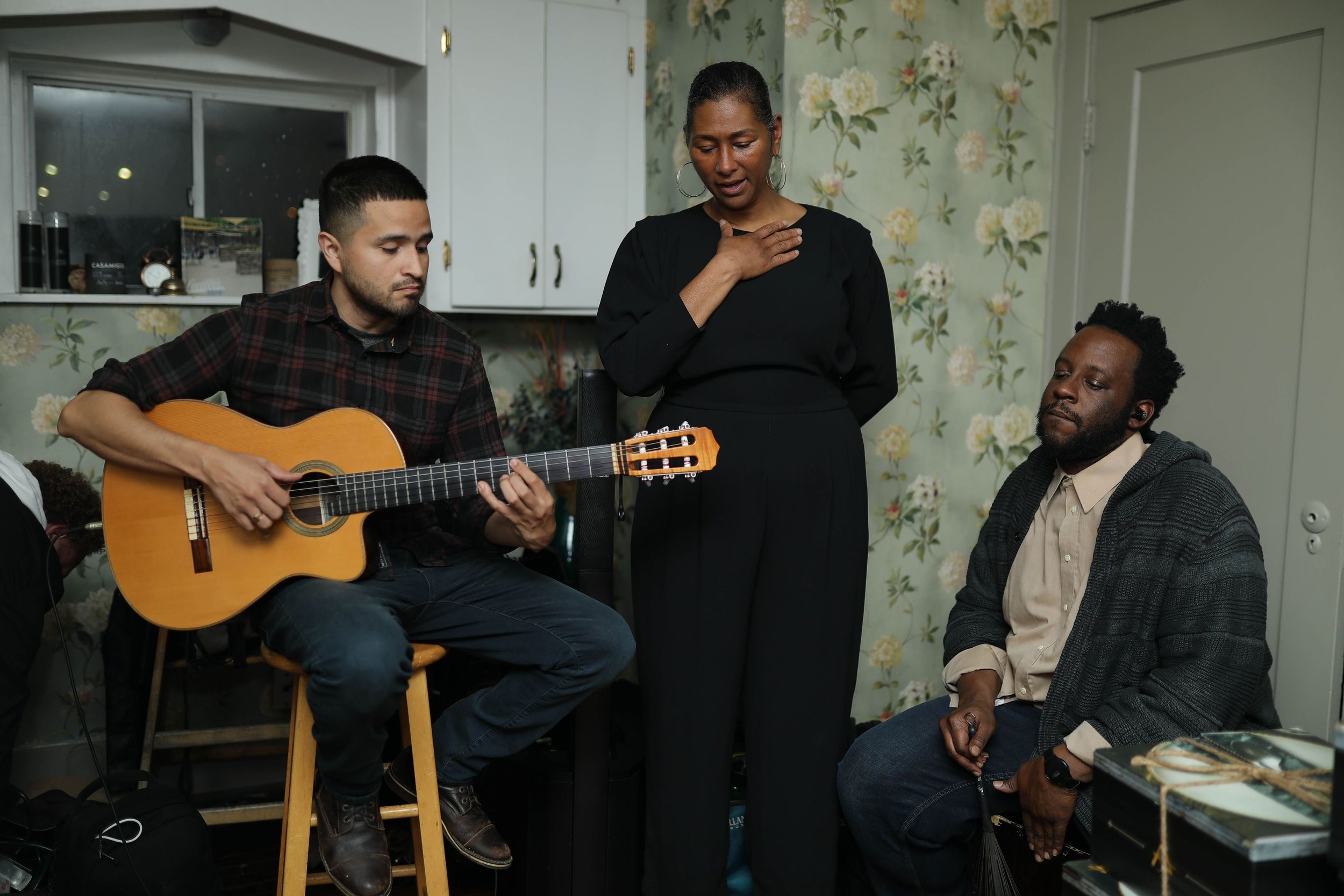
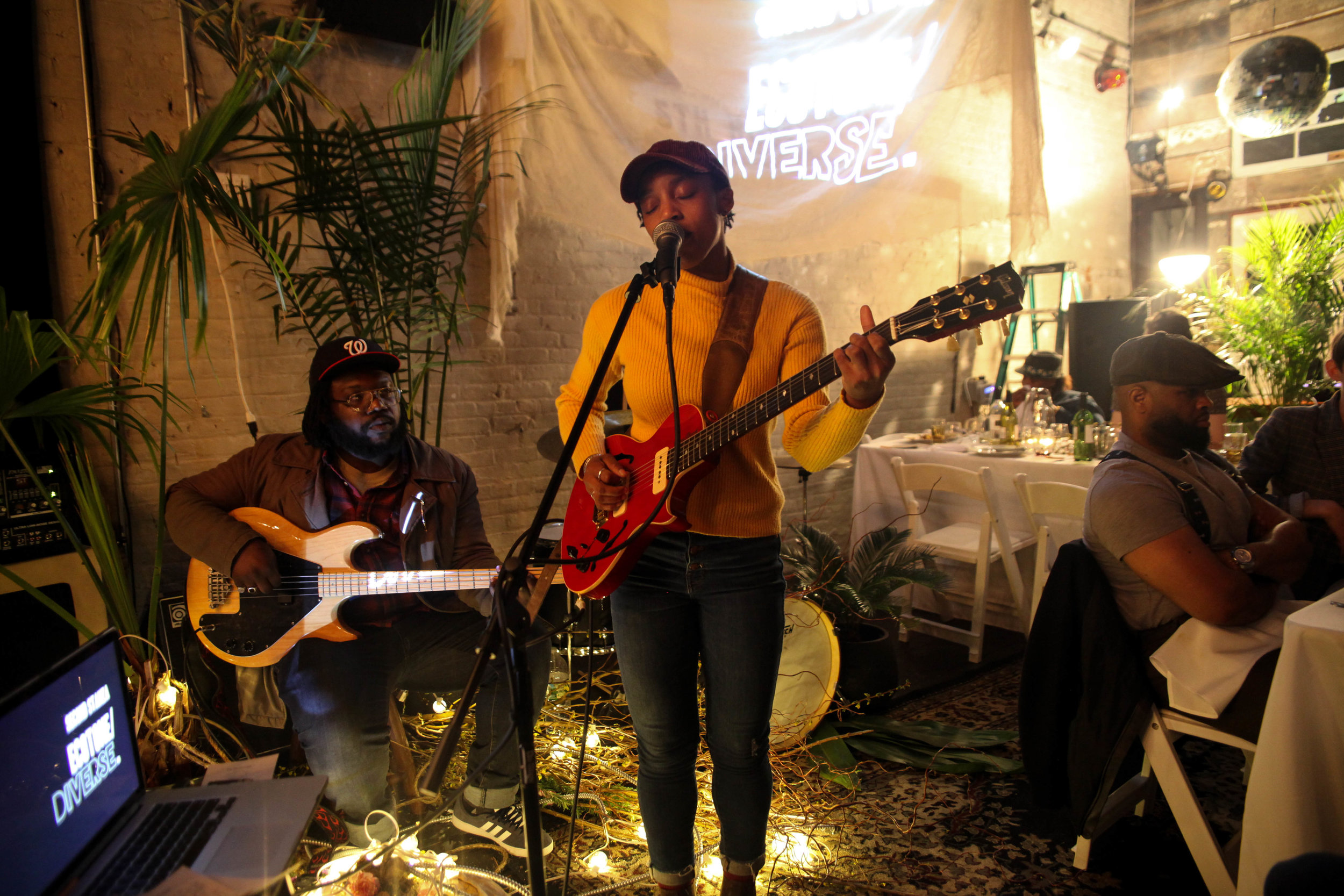
Participants take part in a renegade anthropological study of human connection and purpose. For one evening, they cannot speak about what they do, only who they are and why they exist. Original music, thoughtful cuisine, and intentional dialogue create a space where diverse lives intersect—reminding us of the beauty of being human together.
Hall has convened more than 300 Ecotone-style dinners worldwide, including as the central project of his 2024 Artist Residency with the University of Wisconsin Division of the Arts.
https://www.marlonhall.com/from-a-door-at-the-center-of-the-table (Click Here)

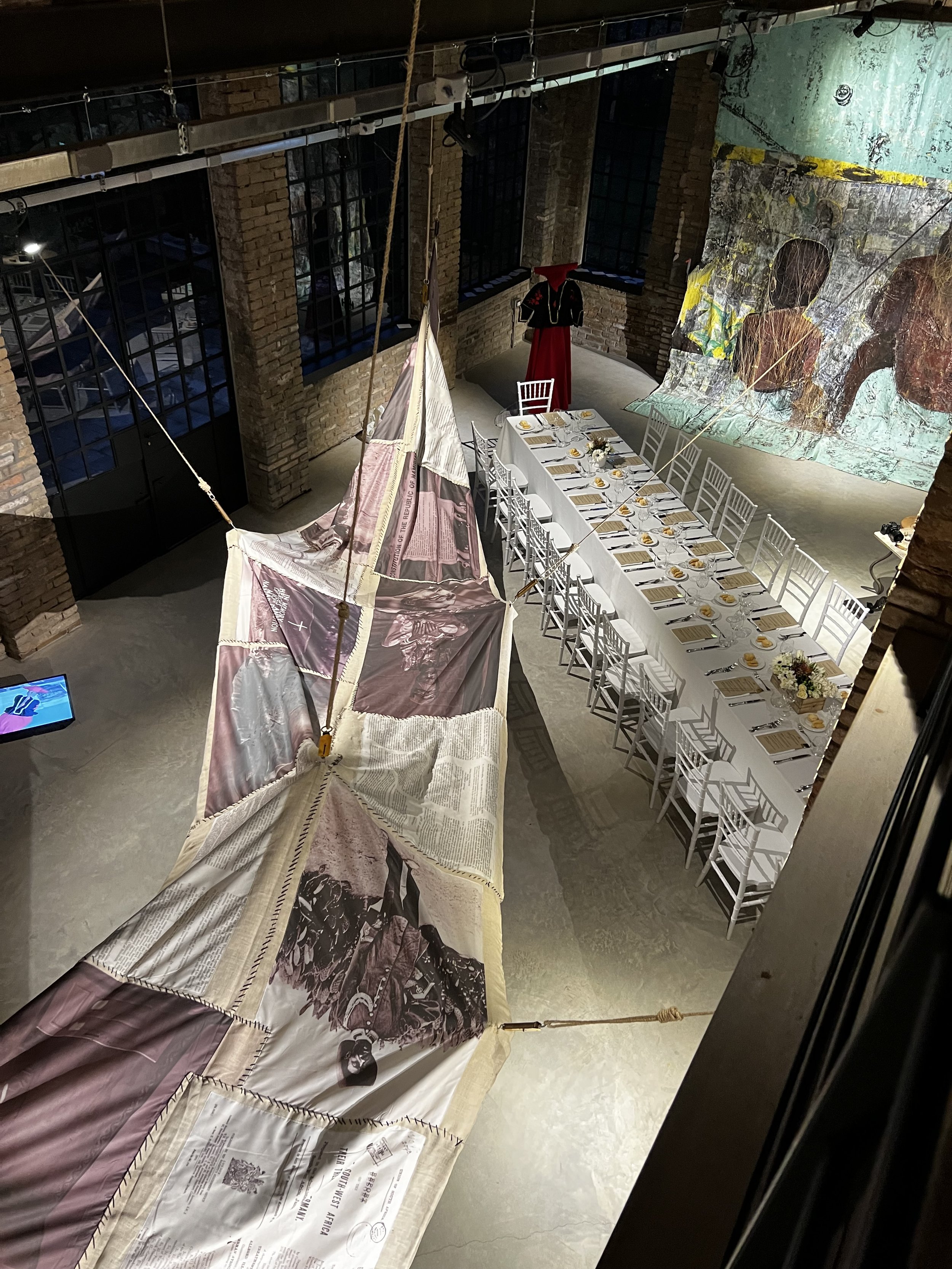
Structured around a shared meal, the Ecotone Salon explored “story” through ritual, music, laughter, and conversation. Rooted in the belief that before governments, temples, or universities, the meal was humanity’s first educational institution.
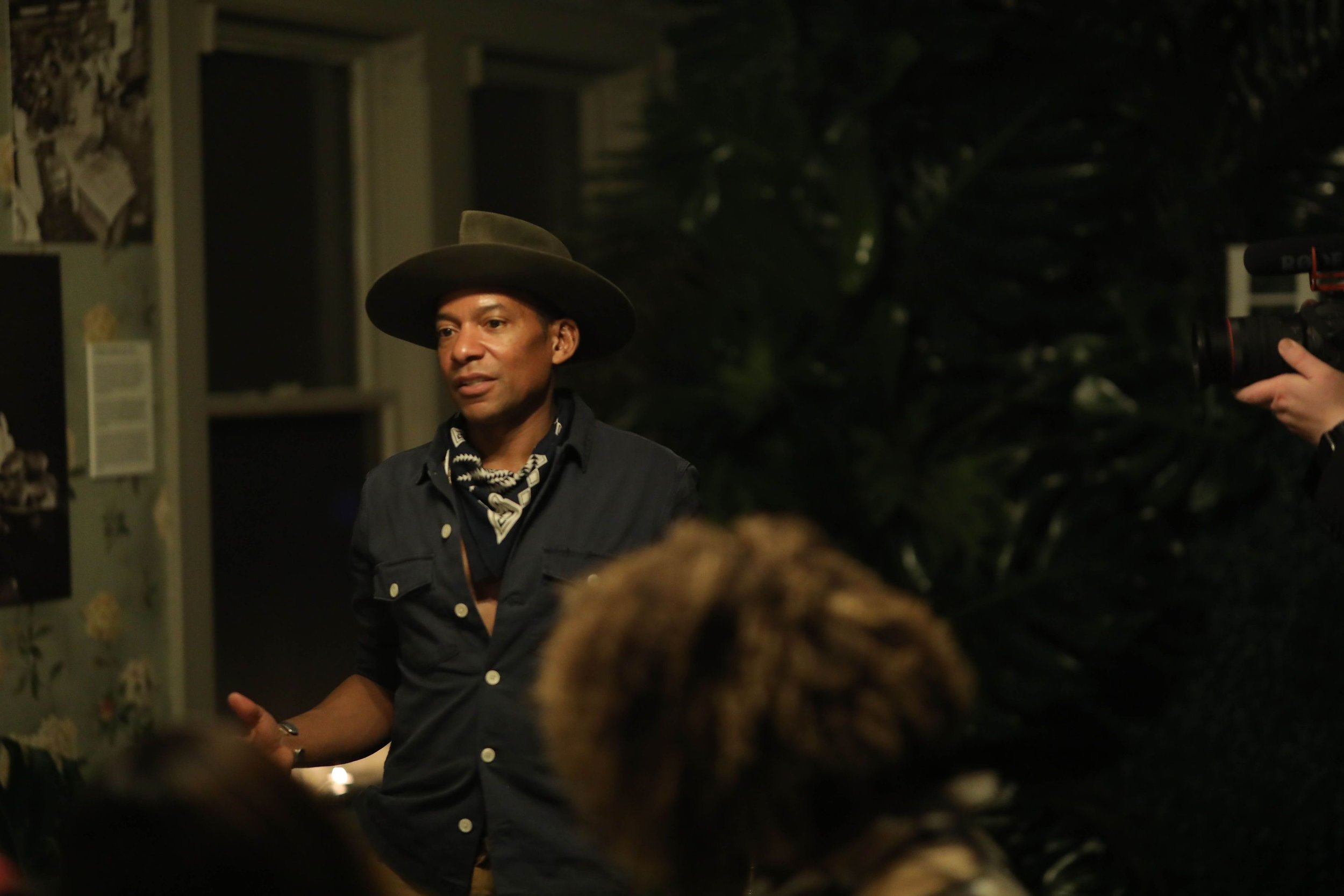

The Table as Social Architecture
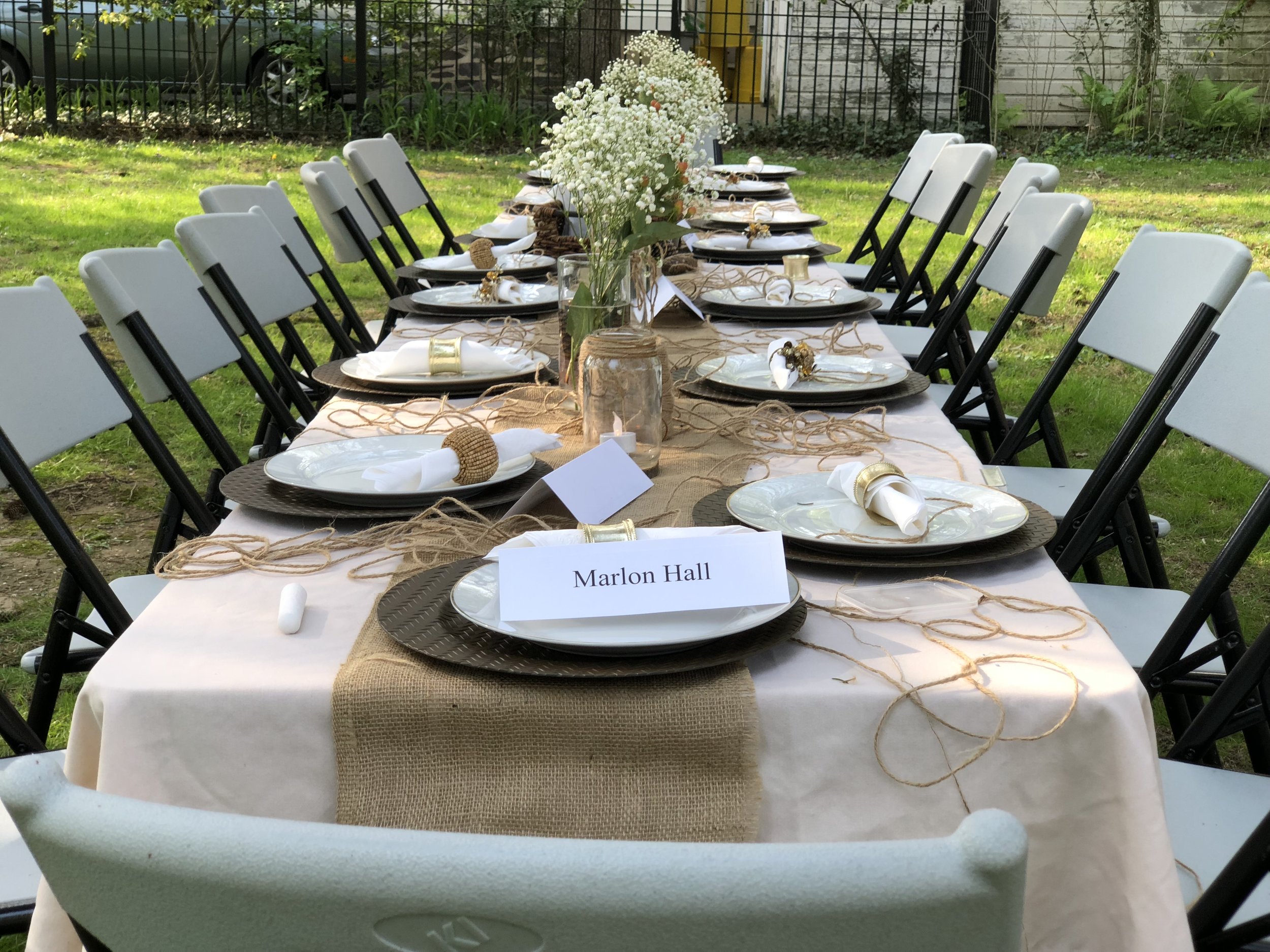
At the center of Ecotone Salon is the belief that the table is one of humanity’s oldest technologies for belonging.
When people share food in a thoughtfully designed environment, the conditions for curiosity and dignity can emerge naturally.
Guests are intentionally seated among individuals they might not otherwise meet. Through gentle prompts and facilitated dialogue, participants move beyond small talk toward meaningful exchange about identity, community, memory, and the future we are shaping together.
The dinner becomes more than a social event.
It becomes a space of encounter.
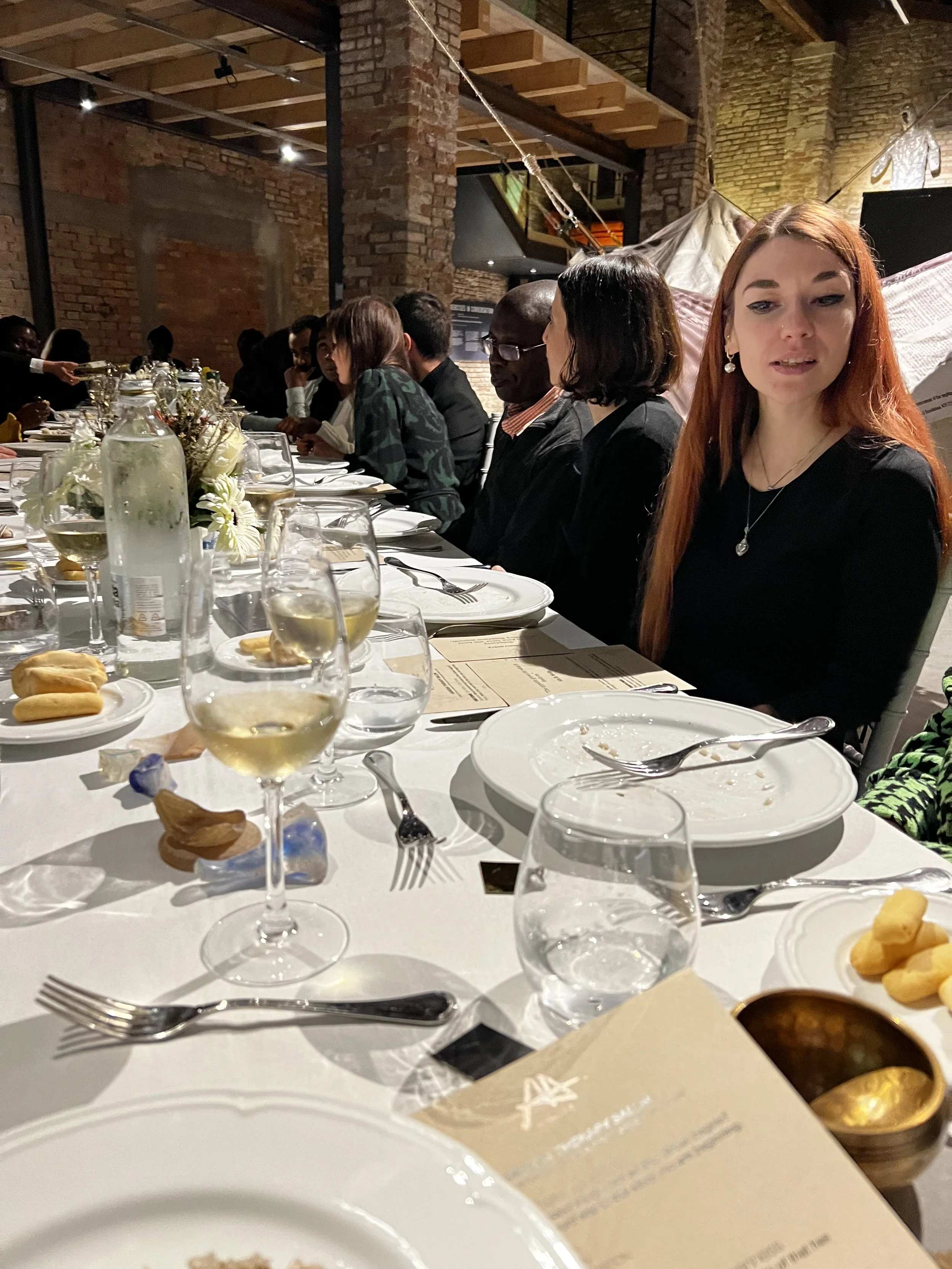
Participants engaged in a renegade anthropological study where they could only speak about who they are and why they exist — never what they do. Artists and curators from across Africa and the UK gathered at the table to explore memory, voice, and artistic purpose.

Marlon makes tables to make meals of culturally and cognitively diverse people who grow together in ways they can not grow alone. Nairobi, Kenya

This is half of the door Marlon fabricated in Nairobi, Kenya during his recent residence with Kemane Art Residency in collaboration with The United States Embassy.

He unearths beauty from brokenness by digging through piles of doors as a source of spiritual archeology.
A Living Artwork
Ecotone Salon extends Marlon F. Hall’s practice of social sculpture, where the artwork is not only an object, but a carefully designed human experience.
The dinners bring together artists, civic leaders, neighbors, students, and cultural thinkers around tables where conversation itself becomes the creative act.
In these spaces, difference is not something to overcome.
It becomes the very material from which understanding and dignity are built.

Marlon believes dinner tables are not just horizontal surfaces on which we eat. They are also vertical portals through which we connect and learn from each other. A doorway that accesses our humanity one meal at a time.

The doors exhibit in galleries as vertical art for the walls and floor spaces as well as horizontal art for meals as social sculpture. These are human hopes guests placed in one of the archival doors that serve as tables in Nairobi.
Invitation
Ecotone Salon dinners are commissioned by institutions, cultural organizations, and civic partners who believe that gathering people across difference is essential to the health of a community.
Because when people sit together long enough to listen, something extraordinary happens.
We begin to imagine one another differently.

“Between Two Worlds”
Nairobi, Kenya 2023
A table made of reclaimed doors that hang as wall installations.

This is a table made in Tulsa, Oklahoma where Marlon was a Tulsa Artist Fellow who conjured the phoenix rising from the ashes of the 1921 Tulsa Race Massacre with meals that brings people together. The design is consistent all over the world with two 6 feet pieces with a door that connects them in the center and triangles on either side. Connecting people who were divided through the triangular hope of mind, body, and spirit connection.

Marlon uses reclaimed materials from the communities he lands in as a resource for wholeness through the power of art.

Hall inherited his passion for functional art making from his father who is an upholsterer and artist in Houston, Texas.